Over the course of three seasons, Riso Gallo and xFarm Technologies have developed Gallo4Farmers, a digital platform designed specifically for rice, and are now measuring the environmental impact of the supply chain, including factors specific to rice paddies.

With a presence in over 80 countries, Riso Gallo is one of Italy’s largest and oldest rice producers, with a certified supply chain comprising over 200 farms.
However, the unique nature of rice cultivation presents its own challenges. Increasingly stringent European sustainability regulations require the measurement of impacts typical of rice paddies, such as methane emissions from the flooding phase and the energy used to dry the harvest. In the field, meanwhile, climate change is making water scarcer and rainfall less predictable, while blast disease—the primary fungal disease affecting this crop—can compromise a significant portion of the harvest. To address both of these challenges, data must be collected directly from farms.
Hence the goal we share with xFarm Technologies: to digitize the entire supply chain using free, innovative tools designed specifically for rice, which help farmers with their day-to-day management and enable Riso Gallo to measure the impact of the cultivation phase on the supply chain.
The project began in 2023 with six pilot farms and has grown over the years: 26 farms in 2024, 56 in 2025, and 75 in 2026. At its core is Gallo4Farmers, a single tool for managing the farm and calculating the environmental impacts of crop production.
What convinces farmers? According to Riso Gallo, it’s a customized digital solution, presented directly on the farm, and its integration with the Carta del Riso—the supply chain code of conduct that will also be certified by a third-party organization starting in 2025. Trust matters, too: data is shared with Riso Gallo only with the farm’s consent and is used to monitor and improve the entire supply chain.
Between 2024 and 2025, the sustainability analysis expanded from 20 to 28 farms, increasing from approximately 1,600 to 1,960 hectares. As the scope expanded, so did the amount of dry paddy rice harvested, rising from 10,590 to 13,070 metric tons, while yields per hectare remained stable and in line with the national average, ranging between 6.6 and 6.7 metric tons per hectare.
The carbon footprint per metric ton has not changed either, remaining at 1.05 metric tons of CO₂eq/t. The supply chain thus demonstrates its ability to expand without losing efficiency, and this serves as the starting point for measuring improvements in future seasons.
The data collected on the platform also indicate where action should be taken to reduce environmental impacts. Water management is the key factor: farms with fewer days of flooding and those that practice dry seeding have, on average, the lowest environmental impacts per hectare (−12% impact per hectare and −11% impact per metric ton). Next are fertilizer management—where more nitrogen does not necessarily mean higher yields—and drying, where the moisture content of the paddy rice at harvest plays a significant role.
On the defense front, the model for the “brusone” pest developed with Riso Gallo takes into account the susceptibility of each variety listed in the Rice Chart. In 2026, its predictions proved to be consistent with field observations. The goal is to develop a dedicated model for each variety listed in the Rice Chart.
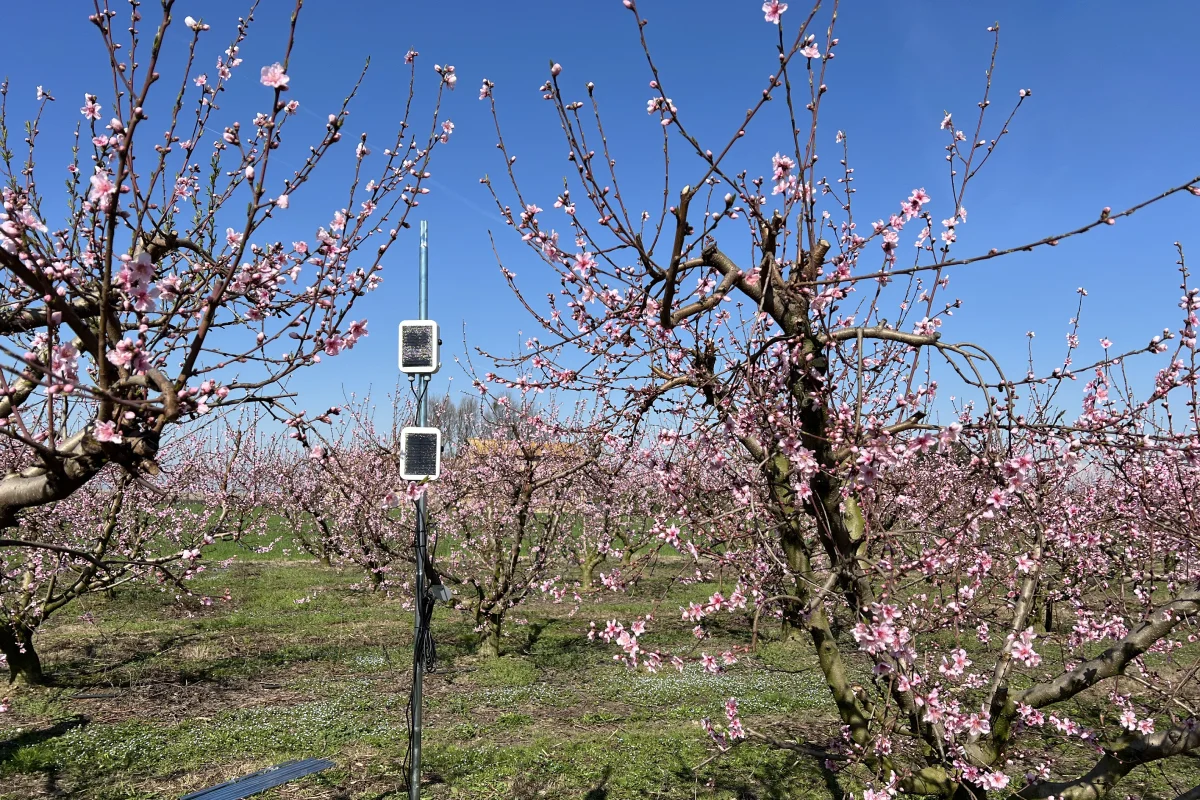
The initiative continues on three fronts. The first is regenerative rice farming, with the SORRISO project (2025–2027), in which Riso Gallo and xFarm are working alongside other partners to develop a field-validated protocol. Meanwhile, the network of weather stations is expanding to include new farms, and the entire supply chain is preparing for the digital farm log, which will be mandatory starting in 2027.
Gallo4Farmers is not just anapp: it is the place where the Riso Gallo rice supply chain collects its data, measures its impacts, and decides what and where improvements can be made, season after season.
A more sustainable rice paddy starts with what you can measure.
Innovation is a strategic driver for Riso Gallo, and the partnership with xFarm Technologies is a concrete example of this.
With Gallo4Farmers, we put technology and new tools at the service of the supply chain, helping farms achieve increasingly effective and efficient management.
Riccardo Preve, Managing Director of Riso Gallo
Our partnership with Riso Gallo reflects our vision: to put technology to work for the agri-food supply chains to make them more efficient, transparent, and sustainable. Gallo4Farmers is the result of a collaborative effort that, season after season, involves a growing number of farms.
Matteo Vanotti, CEO of xFarm Technologies